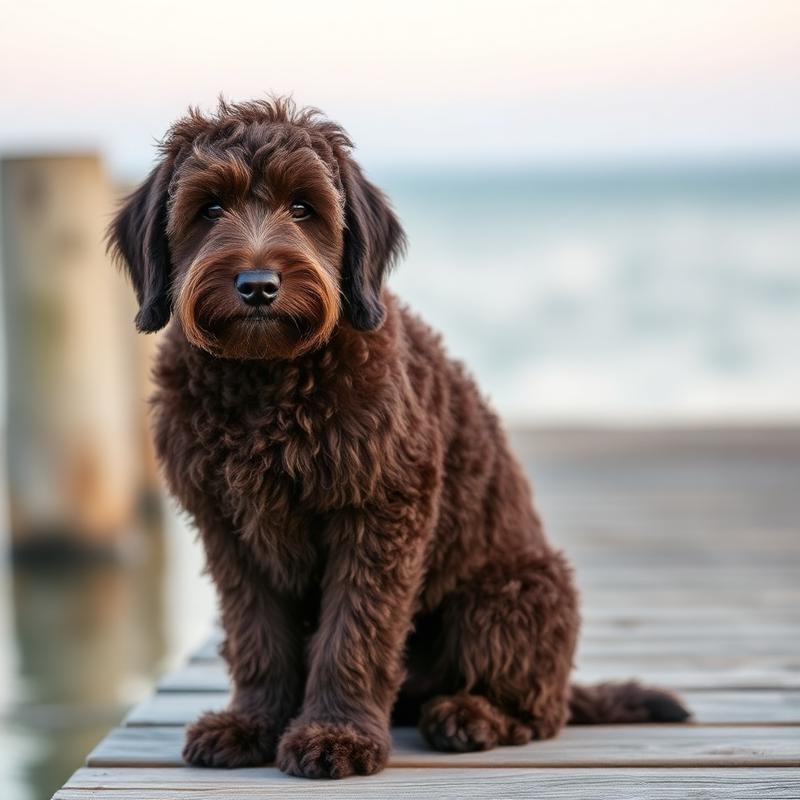
Cedar
6 years old · Wells
Chocolate, shaggy, and completely unbothered by clippers. He falls asleep standing up during the blow-dry every single time.
Labradoodles are built for the water and the woods — which is exactly why their coats need a groomer who knows the difference between fleece, wool and hair. K-Pup brings the salon to your driveway anywhere along the southern Maine coast, one dog at a time, no crates, no all-day stay.
Three Coat Types
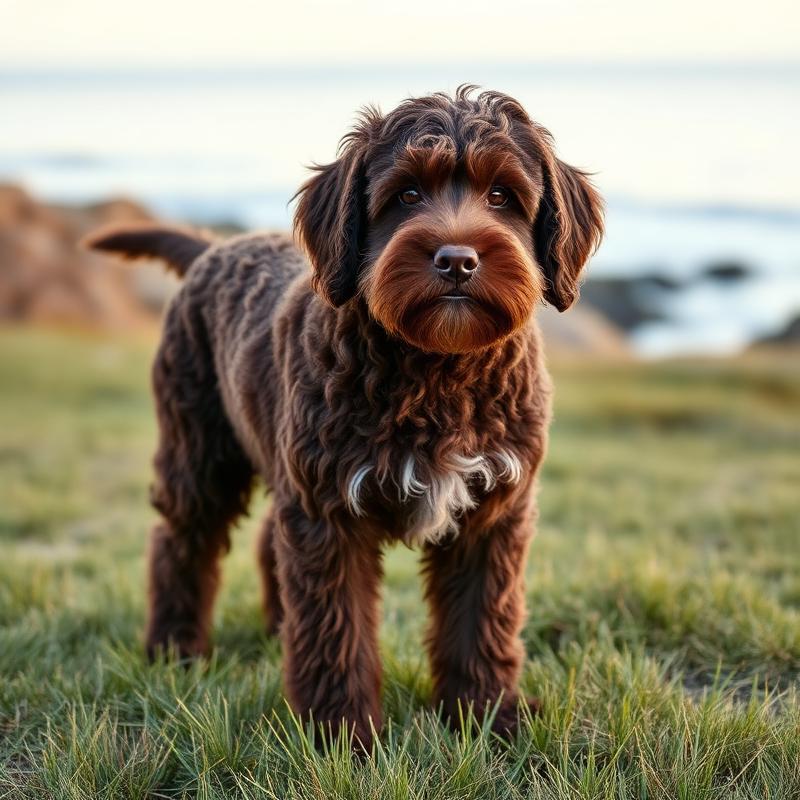
Labradoodle coats vary more than almost any other doodle. Knowing which one you have changes the brush, the blade and the schedule. Background on the parent breed is on the AKC Labrador Retriever page.
The soft, silky wave most Australian labradoodles carry. It's beautiful and it mats quietly — behind the ears, in the armpits and along the harness line. We line-brush to the skin, condition heavily, and scissor a shape that keeps the softness without the felting.
Dense, poodle-like spirals with almost no shedding. Wool coats hold water and debris and need a 4–6 week cycle. We clip or scissor to a maintainable length and keep the density even so it doesn't pack down into a mat.
Straighter, lab-leaning coats that shed rather than mat. These get a deshedding bath, carding and a high-velocity blow-out that pulls the dead undercoat out in the trailer instead of onto your couch.
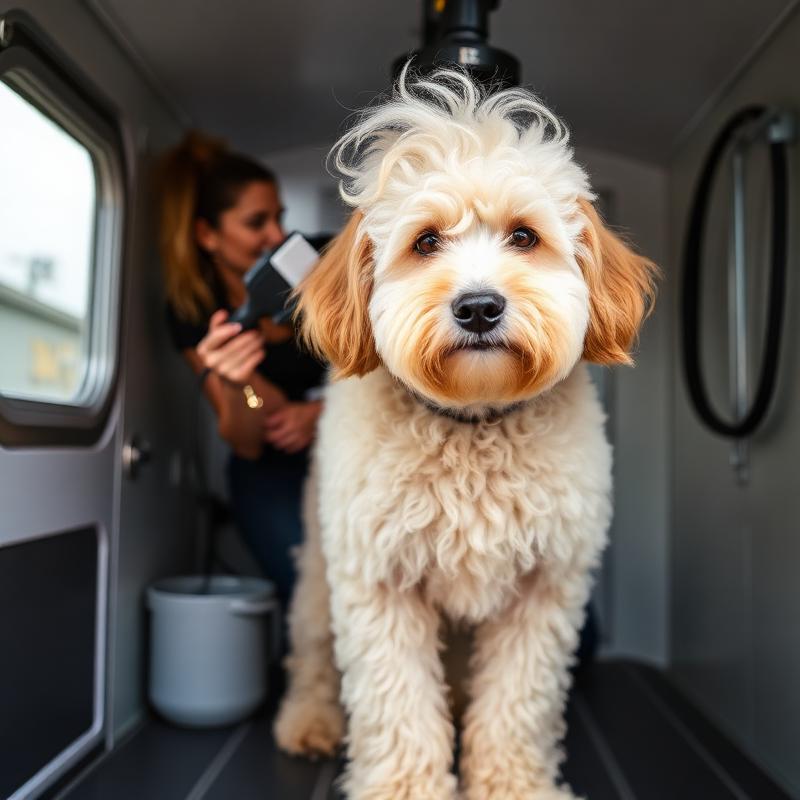
Smaller labradoodles are often the wiggliest dogs on the table. Working one-on-one in a quiet trailer, without a room full of barking, gets us a much better groom on a busy dog.
Coastal Coat Care
Labradoodles swim. Dried salt water is abrasive against the skin and stiffens a fleece coat until it mats. A clarifying wash and a complete dry undoes a whole summer's worth of ocean days.
Drop ears plus swimming is the classic recipe for infection. We clean, pluck where appropriate, and dry thoroughly — and we'll flag anything that looks like it needs a vet before it gets worse.
Hair between the pads collects mud, ice balls and road salt from November to April. We trim pads flush, tidy the foot, and cut the nails short enough that they aren't hitting your hardwood.
Hands-on time is diagnostic time. We flag hot spots, ticks, lumps and irritation as we brush — a lot of our clients find things early because their groomer saw it first.
For breed background and health screening standards, the Australian Labradoodle Association of America is a solid resource for labradoodle owners.
Services
Line-brush, clarifying bath, high-velocity dry, full trim to your chosen length, face and feet, ears, nails and sanitary.
For hair-coat labradoodles: deshedding bath, carding and a full blow-out that gets the loose undercoat out of the house.
Comfort-first dematting or a humane short reset, plus a realistic plan to grow the coat back out.
Our Process
Every labradoodle appointment follows the same order, start to finish, in the trailer in your driveway. Typical appointment time: about 2 hr 30 min, one dog at a time.
Labradoodle coats run from loose fleece to tight wool, and each one takes a different plan. We assess coat type and matting at the door and confirm the trim before the dog leaves your hands.
Fleece-coat labradoodles shed into themselves, so we pull the dead coat out with a slicker and undercoat rake, line-brushing section by section until a comb passes to the skin everywhere.
Labradoodles love the water, and Maine salt water plus marsh mud is hard on a fleece coat. A clarifying shampoo followed by a conditioning rinse resets the coat and cuts the doggy smell at the source.
Wool and fleece coats have to be dried under velocity to release curl and reveal any remaining tangles. This is where a mat we missed shows itself, and we work it out before scissors touch the dog.
A clipper pass sets an even body length, then hand-scissoring shapes the head, tail and legs. Active labradoodles usually go shorter through the body and keep a fuller head — easier for you between visits.
Nails clipped and ground smooth, ear hair cleared and canals wiped, sanitary and paw pads tidied, then a light coastal-safe spritz. We hand you back a dog you can put straight on the couch.
This is the full step-by-step process K-Pup Dog Grooming uses for labradoodles in southern Maine.
Client Spotlight
A few of the labradoodles we look forward to seeing on the schedule — regulars from around southern Maine who hop up on the table like they own the trailer.
6 years old · Wells
Chocolate, shaggy, and completely unbothered by clippers. He falls asleep standing up during the blow-dry every single time.
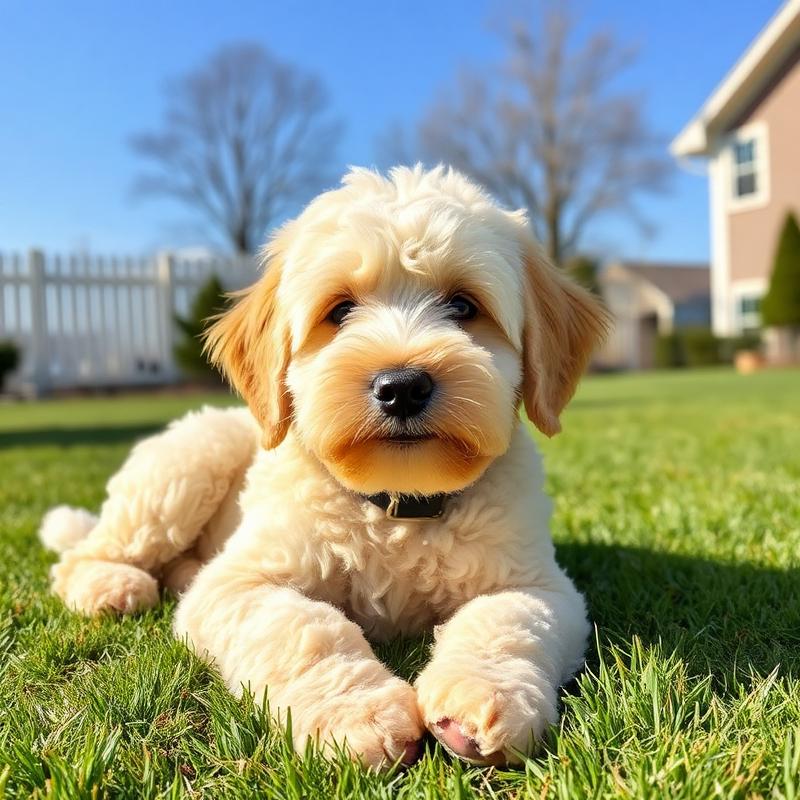
10 months old · Kennebunk
An Australian labradoodle with a proper fleece coat. Her puppy visits are short, sweet, and mostly about learning the routine.
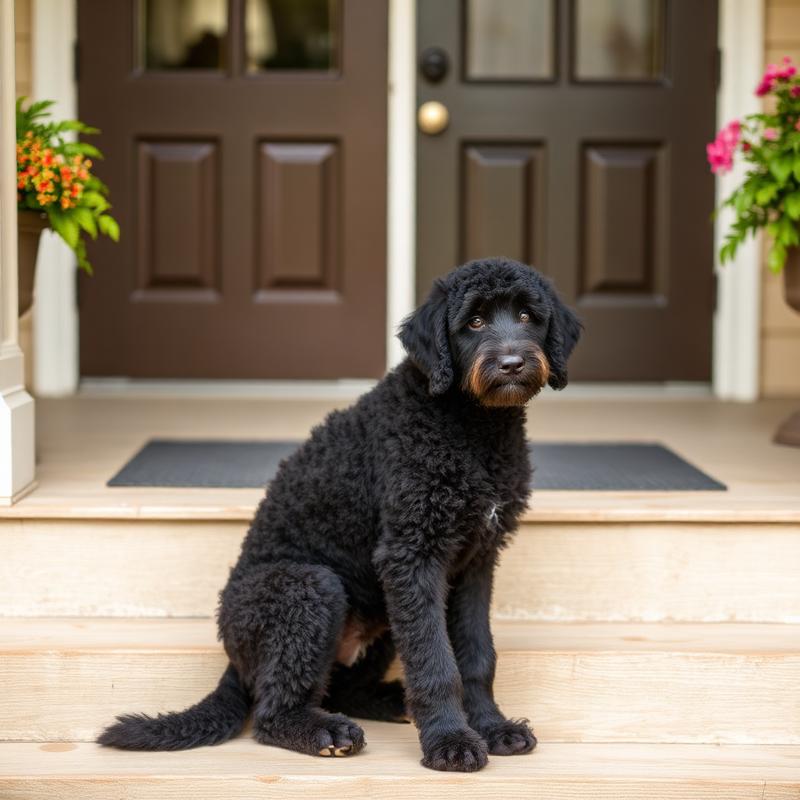
11 years old · Saco
Our favorite senior black doodle. We keep him in a short, easy trim and take plenty of breaks — the driveway appointment is easier on his hips.
Fun Facts
We groom a lot of labradoodles, and every one of them reminds us why the breed has such a loyal following. Here's what we love about the labradoodle.
The first labradoodle was bred in Australia in 1989 to be a guide dog for someone with allergies. The breed's whole personality comes from that job.
Three distinct coat types, three different grooming plans. Wool coats mat fastest; hair coats shed the most. We groom all three.
Lab drive plus poodle stamina means these dogs want a real walk. Bonus: a tired labradoodle is a very cooperative labradoodle.
Both parent breeds are water retrievers, so the coat sheds water well — and holds salt and sand just as well until rinse day.
Labradoodles hate being left out. They'll follow you room to room, which is also why they settle so well inside the trailer.
Soft mouths, high tolerance and a goofy streak — it's hard to find a better family dog for a busy household.
Related Breeds
labradoodles share brushing, drying, and trimming needs with these breeds — each guide covers coat care, timing, and pricing for mobile grooming in southern Maine.
Services
The visits labradoodles book most often, and what each one includes.
Humane dematting, honest shave-down advice, and why a short haircut is sometimes the kindest option.
Read more →$20–$170What mobile grooming actually costs here, why prices vary by dog, and what's included at every tier.
Read more →Where We Groom Labradoodles
Looking for a labradoodle groomer near you? We bring the trailer to driveways up and down the southern Maine coast every week — pick your town below. See all our locations →
Labradoodle Grooming FAQ
Fleece and wool coats need a full groom every 4–6 weeks with brushing at home several times a week. Hair coats can stretch to 8 weeks between deshedding baths. Summer swimmers usually want more frequent baths, not longer gaps.
Fleece and wool coats shed very little — the hair stays in the coat and becomes matting instead. Hair-coat labradoodles shed like a Labrador. Neither is hypoallergenic in the absolute sense; both benefit from regular grooming.
Absolutely — that's most of our summer schedule. A rinse-and-dry between full grooms keeps salt out of the coat and skin issues down. Many clients book a mid-cycle bath in July and August.
Usually, yes. No car ride to a strange building, no other dogs, no crate, no waiting. Your dog is groomed in your driveway and back inside in about 90 minutes.
We serve Kennebunkport, Kennebunk, Cape Porpoise, Goose Rocks Beach, Arundel, Biddeford, Saco, Wells, Ogunquit, York, Old Orchard Beach and Scarborough, covering the coast from York up through Scarborough.